
















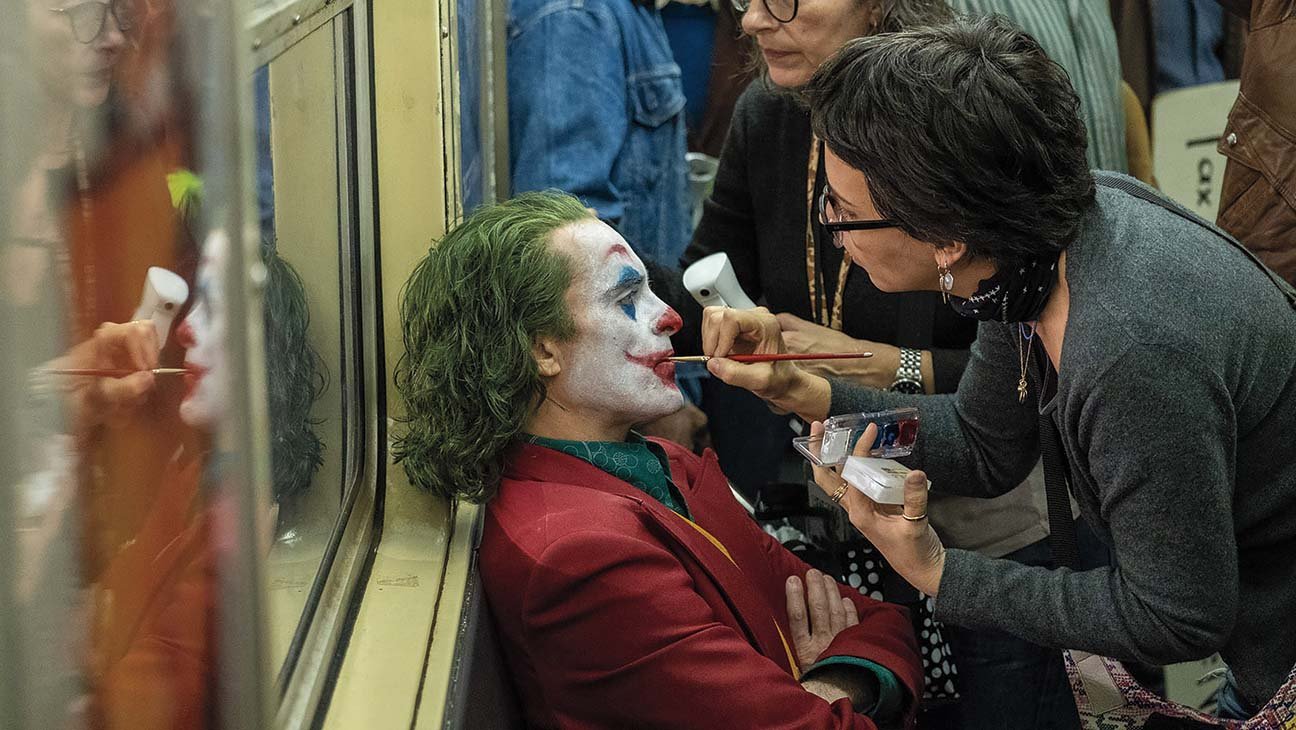
Phoenix famously put himself through the wringer for the role, losing 52 pounds. He suffered hunger pangs and had trouble sitting still, so Ledermann and Georgiou made a pact with the actor early in the process: Both women would perform their work at the same time to minimize the actor’s time in the chair. It took about 40 minutes on the long end. They also tried to work quietly “to let him have his space so he could be in his head and prepare for the scene,” notes Ledermann.
Georgiou envisioned Arthur as a man who cut his own hair and didn’t wash it often. She dyed Phoenix’s hair a dark brown several months before shooting, knowing that it would get lighter by the time cameras rolled. “I would put a lot of grease and product in it,” says Georgiou.
Costume designer Mark Bridges suggested broccoli green for the Joker’s hair, a look achieved through a series of wigs because the shooting schedule demanded Phoenix go back and forth between Arthur and Joker.
Though Joker is much less special-effects driven than the typical comic book film, its crowning shot was achieved with a little CGI help. A key moment sees Joker stand atop a car and paint a smile on his face using his own blood, which was added in post. Says Ledermann, “That was one of the few moments where we did have help from CGI to create exactly the way we needed it to be.”

This story first appeared in a The Hollywood Reporter awards standalone. To receive the magazine, click here to subscribe.