


















For Meagan Good, who has been acting since she was a child, becoming a bawse meant having the opportunity to break away from the sexy girlfriend characters that defined her 20s. What attracted her to the role of Darla Dudley in Shazam! was the chance to ask the question “Who is this person at the core?” With so many women of color being typecast as exotic of hypersexualized, playing an 8-year old who becomes a superhero gave her a freedom to show off her goofy side.
Good also highlighted when it came to being a Black woman, the Black aspect of identity always comes first, noting that women of color are not always treated the same as white women in the industry. That was an issue Anna Diop had to contend with when she was cast as Starfire on Titans, and faced backlash from certain sectors of “fandom” over her skin color.
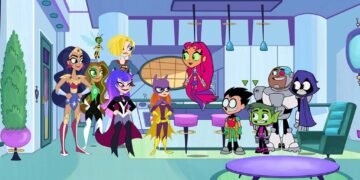
“I had to lean into my friends, and my family, and my faith in a way I hadn’t needed to before.” Despite the controversy surrounding her casting, Diop has found her experience portraying Starfire to be an incredible one that has inspired many marginalized people. For children who have been marginalized, seeing themselves as heroes on the screen can have a life-altering affect. Candice Patton, who portrays Iris West in CW’s The Flash shared a story of a woman she met who forever changed her perspective on playing the character.
“Her daughter was watching the show and said ‘Iris West is so beautiful. Does that mean I’m beautiful too?’ Patton said the story brings a tear to her eye every time she thinks about it. The BAWSE panel also featured a few representational firsts, with Nafessa Williams portraying TV’s first lesbian Black superhero, Thunder, Javicia Leslie playing the first Black Batwoman, Ryan Wilder, and Ayala Ashe playing the first Muslim-American superhero, Zari Tomaz.
Each of the actors noted the weight of their roles, and the opportunity to allow people to see themselves in media and worlds that they hadn’t been able to before. Ashe said that one of the really smart things that Legends of Tomorrow did when she was cast was also hired a Muslim-American writer. Representation both onscreen and behind the camera has a tremendous effect on how these characters are able to inspire.
As much as each of these actors is setting a precedent within the world of superhero television and film, Damaris Lewis noted that they would not be there without the people who came before them. Leslie noted that Eartha Kitt was a major inspiration, both for her art and activism. Chantal Thuy, who plays Grace Choi, said, “growing up I had Maggie Chung as someone I admired a lot and Sandra Oh, who broke a lot of barriers.” She credited much of her strength to her grandmother who left Vietnam on a boat with ten kids.
As representation becomes increasingly important to the endurance of superhero stories, it’s key to consider how the stories being told contribute to bettering the conditions of marginalized people. Even in worlds of fiction, centered on superpowers, costumed villains, and cross-overs, there is still plenty of room for bawses.